Understand Your Rate Structure Before You Change Anything
Before you fix your HVAC, swap light bulbs, or call your utility company, read your electricity rate plan. Most people pay a flat rate per kilowatt-hour, meaning every hour costs the same. But if you live in an energy choice state, time-of-use plans exist that charge different rates depending on the time of day.
As of 2025, 18 states and the District of Columbia allow residential retail electricity choice, giving you the option to switch suppliers. This matters because the biggest lever is often not fixing your home, but fixing your contract. With a time-of-use plan, you can run your dishwasher, washing machine, and laundry at night when rates are lower. One source recommends waiting until after 6:00 p.m. to cook, do laundry, or wash dishes on particularly hot days to avoid peak pricing.
If you can shift even some high-energy tasks to off-peak hours, a time-of-use plan may save more than any appliance upgrade. The catch: you have to be home and able to change your habits. If you run your dishwasher whenever it fills up, or if you cook at 6:00 p.m. every evening, this plan will not help you.
If you are on a variable rate, consider switching to a fixed rate during low-demand seasons like fall and spring. This locks in your price and protects you from rate increases during summer and winter when demand and pricing spike.
Your HVAC System Is Your Biggest Energy User and Easiest Lever
Heating and cooling accounts for the largest share of residential electricity use. The good news is that maintaining it costs almost nothing and saves measurably.
A clogged air conditioner filter cuts efficiency dramatically. Clearing a clogged A/C unit filter alone can save 5 to 15 percent in energy use. This is a 10-minute job that costs nothing if you already own filters.
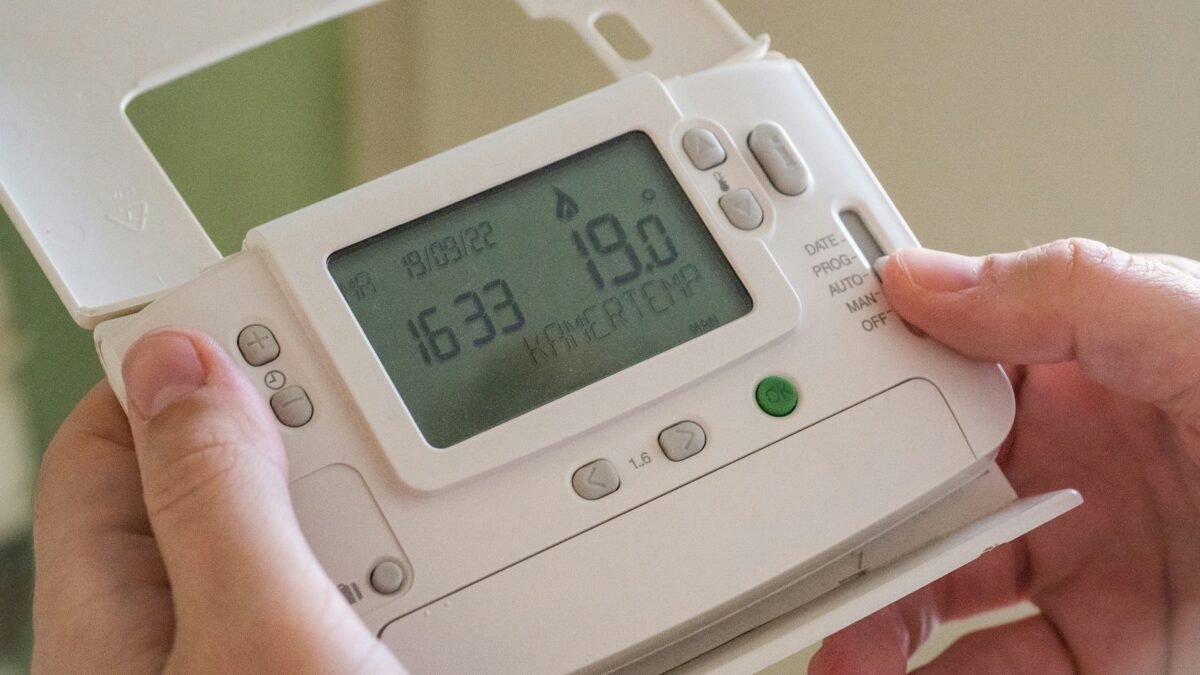
Thermostat adjustments also work. One study found that each degree a thermostat is set above 75 degrees Fahrenheit could save 10 to 15 percent in energy used during summer. In winter, lowering your thermostat by a few degrees produces similar savings. This is free and requires no equipment. The trade-off is comfort: you will feel warmer in summer and cooler in winter.
If you use a ceiling fan along with your air conditioner, fans use roughly 1/60th the energy of an air conditioner. Running a ceiling fan can cut back on air conditioning needs, saving up to 40 percent on cooling electricity. This allows you to raise your thermostat a few degrees while staying comfortable, multiplying the effect of the temperature adjustment. A ceiling fan costs between 50 and 200 dollars depending on quality, but spreads that cost over years of use.
Routine HVAC maintenance, such as changing air filters regularly, keeps your system from working harder than it needs to. Professional maintenance costs more but extends the lifespan of expensive equipment and ensures it runs at peak efficiency.
Home Sealing and Insulation Stop Energy Waste, but They Require Investment
If your heating or cooling system has to work harder to maintain temperature, your bill rises. Sealing air leaks and adding insulation reduces that strain by helping your home hold its temperature longer.
Check seals around windows, doors, and appliances. Add weatherstripping to gaps to prevent warm or cool air from leaking out. Fix leaky ductwork to ensure your heating or cooling system distributes air efficiently. These measures prevent wasted conditioned air and reduce how long your HVAC system needs to run.
You can also use passive methods that cost almost nothing. Window coverings add insulation and block heat in summer. In winter, closing heavy curtains at night reduces heat loss through windows. In summer, blackout curtains block the sun during the hottest hours of the day.
Planting shrubs and trees on the south and west sides of your house, or over your outdoor air conditioning unit, can make your cooling system up to 10 percent more efficient by providing shade. This takes years to show full effect but costs little once established.
Major insulation upgrades and new windows require significant upfront spending and should only be considered if you plan to stay in your home long enough to recoup the cost through monthly bill reductions.
Minor Efficiency Moves Save Less Than You Think
Turning off lights, unplugging devices, running full loads in your dishwasher and washer, and using cold water for laundry all help. But they are not your primary lever.
Water heating accounts for about 18 percent of household energy consumption. Lowering your water heater temperature, hang drying clothes instead of using a dryer for full cycles, and running only full loads of laundry do reduce costs. But even combined, these changes produce smaller savings than a single HVAC adjustment.
Swapping incandescent bulbs for LED bulbs uses less electricity per bulb, but lighting accounts for a small portion of total home energy use. The bulbs pay for themselves over time, but this is a supplementary measure, not a primary cost driver.
Unplugging devices and using smart power strips eliminate phantom electricity drain from appliances in standby mode. This matters more in homes with many networked devices, but for most households it is a minor factor compared to heating and cooling.
The pattern is clear: focus on the big three first. Fix your rate plan. Maintain and optimize your HVAC system. Seal and insulate your home. Then layer in efficiency habits if you have the discipline. Generic energy tips are everywhere, but they move the bill only at the margins.
Track Your Usage to Find Your Specific Problem
Many utilities and energy suppliers offer apps and email summaries that show your usage by time of day or week. Some also compare your usage to similar homes in your area. These tools help you identify whether your problem is peak-hour consumption, a specific appliance running too often, or baseline inefficiency in your heating and cooling.
If your comparison shows you use significantly more than similar homes, the issue is likely HVAC or insulation. If your bill spikes on hot or cold days, thermostat adjustments or system maintenance may be the fastest fix. If your usage is highest during peak hours, shifting to a time-of-use plan or moving high-energy tasks to off-peak times makes sense.
Without this information, you are guessing. With it, you can target your effort where it will move the bill the most.
 IKEA TREASJÖN Mirror Cabinet Combines Storage and Lighting: What Shoppers Should Know
 Ikea Västmärke Qi2 Wireless Charging Stand Arrives: What Shoppers Should Know
 Home Depot Stocked Christmas Decorations Early: What Shoppers Should Know
 Home Depot Halloween Decorations Are Here: What Shoppers Should Know
 Dollar General Deploys AI Technology Across Supply Chain: What Shoppers Should Know
 Home Depot Rolls Out AI Shopping Assistant in All US Stores: What You Need to Know