How to Read Unit Pricing on Shelf Tags
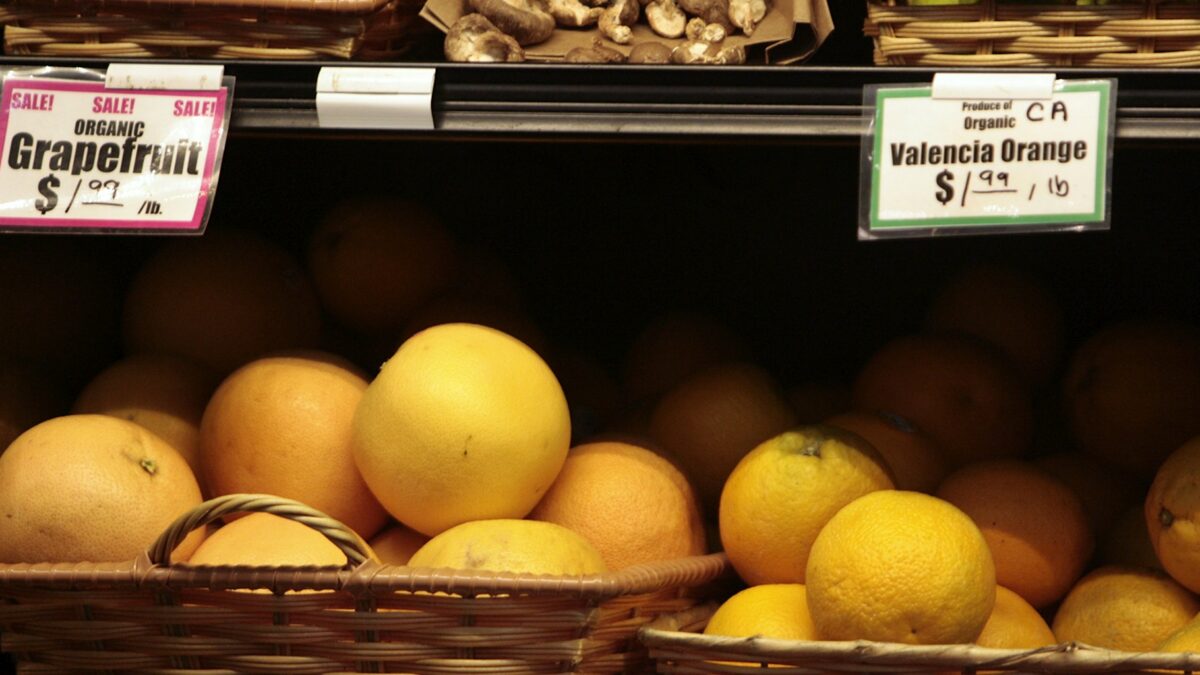
Most grocery stores print the unit price directly on the shelf label below the total price. Look for language like “price per ounce” or “cost per pound.” If the label does not show a unit price, the math is straightforward: divide the total price by the number of units. For example, if a 32-ounce bottle of salad dressing costs $3.89, divide $3.89 by 32 to get $0.12 per ounce.
The key when comparing products is to make sure you are comparing the same unit of measurement. If one item shows price per ounce and another shows price per pound, you need to convert one to match the other before you can make a fair comparison. This is the most common mistake shoppers make and it can lead to buying the wrong item thinking it is a bargain.
For fresh produce priced by the piece rather than by weight, you will need to do the calculation manually. Weigh the item on a produce scale, then divide the price by the weight in pounds to find the price per pound. This extra step takes seconds but can reveal significant price differences between similar items.
Why Bigger Packages Are Not Always Cheaper
Retail reporting and consumer studies show that larger packages typically do cost less per unit than smaller ones. However, this general rule has a major exception: if you will throw away part of the product before using it, the math changes completely. A cheaper per-unit price only saves money if you actually consume the entire package.
This trade-off matters most for perishable items like produce, dairy, and fresh meat. Buying a large package at a lower unit price makes sense only if your household will eat all of it. If you live alone or rarely use a product, a smaller package at a higher per-unit price may be more economical because you avoid waste. The best deal is the lowest unit price that you will fully use, not necessarily the lowest unit price available.
Additionally, end-cap displays that advertise “specials” often show regular prices or even marked-up prices despite the placement. Eye-level items on shelves are positioned there to draw attention, not because they offer the best value. Shopping the upper and lower shelves in each aisle frequently reveals lower unit prices on products that retailers do not actively promote.
Packaging Tricks That Hide Real Price Increases
Retailers and brands use several packaging tactics to disguise price increases and make you spend more without noticing. The most common trick is changing the size of the package while keeping the price the same or similar. For example, a jar that previously contained 12 ounces might now hold 10 ounces at the same shelf price, which is a price increase even though the label looks familiar.
Another tactic is redesigning the package to look larger or more premium while actually containing the same or less product. Taller, slimmer bottles or wider boxes take up more shelf space and create the illusion of value, but unit pricing reveals the truth. This is why checking the unit price is essential even for products you buy regularly, because manufacturers adjust these numbers frequently.
Some brands launch “new” products at premium prices when they are actually the same formula in a different package or size variant. Stores also move products to different shelf positions or temporarily remove sizes to confuse shoppers and disrupt their normal buying patterns. Unit pricing cuts through all of these tactics because it forces you to compare the actual amount of product per dollar, regardless of packaging design.
Comparing Unit Prices Across Brands and Store Brands
Generic or store brands almost always have lower unit prices than name brands of the same product. However, the lowest unit price is not always the best choice if quality or nutritional content differs significantly. Read the ingredient list and nutrition facts label to understand what you are actually buying, especially for foods like protein bars, cereals, and condiments where ingredient quality varies widely between brands.
When comparing products, look at added sugars, preservatives, whole ingredients, and nutritional value per serving. If two products have similar nutritional profiles and ingredients, choose the lower unit price without hesitation. If one product is noticeably more nutritious or has better quality ingredients, you may decide the higher unit price is worth the difference, but make that choice consciously rather than by accident.
Store brands at major retailers like Kroger price match policy, Walmart price match policy, and Aldi price match policy are usually safe bets because these chains source products from established manufacturers. Comparing unit prices across these retailers can also reveal which store offers the best overall value for your regular purchases.
Using Unit Pricing Online and at Warehouse Clubs
Online grocery shopping makes unit price comparisons harder because you must look up the product specifications yourself, as many online retailers do not display unit pricing prominently. When shopping online, click into the product details to find the package size, then manually calculate or search for a unit pricing calculator to compare options. This requires more effort than in-store shopping, but the same math applies.
Warehouse clubs like Costco are famous for bulk pricing, but bulk does not always mean the best unit price. Use the formula of price divided by units to compare a warehouse bulk item against a smaller package at a regular grocery store. The warehouse item will often have a lower unit price, but occasionally a sale at a regular store beats the bulk price. Unit pricing is your tool to know for certain rather than assume.
Make Unit Pricing a Habit
Unit pricing requires only a few seconds per product comparison, but the savings compound over time. Start by comparing unit prices on the products you buy most frequently, where small per-unit savings add up quickly across multiple purchases. After you practice this a few times, spotting the best deals becomes automatic and you will naturally gravitate toward products with better unit prices.
The trade-off is that you must spend a little extra time in the store or online doing math and reading labels instead of grabbing items on habit. This effort pays off because it prevents you from being fooled by packaging tricks, brand positioning, and retailer marketing that cost you money. Unit pricing is the simplest and most reliable tool to ensure your grocery budget actually reflects the value you receive.
 Aldi Faces Lawsuit Over SNAP Delivery Fees: What Shoppers Need to Know
 Costco Emerges as Major Grocery Threat to Traditional Retailers What Shoppers Should Know
 Walmart Activates Shop to Light Feature: What Shoppers Should Know
 Costco Overtakes H-E-B in Customer Satisfaction Rankings: What Shoppers Should Know
 Walmart Fall Deals Sale: What Shoppers Should Know About Early October Shopping
 Kroger Uses AI to Predict Ad Performance Before Spending Happens